
Krylon Workable Fixatif Review – Does This Art Fixative Actually Work?
Quick Verdict
Pros
- Acid-free and archival-safe formula protects artwork long-term without yellowing
- Workable coating lets you erase through it for easy corrections even after spraying
- Prevents smudging and wrinkling on pencil, pastel, and chalk drawings
- Dries to the touch in 30 minutes so you can handle your work relatively quickly
- Clear matte finish doesn't add unwanted sheen to your artwork
Cons
- Aerosol mist can be difficult to control, requiring a ventilated space and practice
- Coverage per can is limited—larger projects may need multiple cans
- Spray distance and evenness require some technique to avoid pooling or uneven spots
- Not suitable for wet media or watercolor work
Quick Verdict
The Krylon Workable Fixatif earns its spot in any dry-media artist's toolkit. It's acid-free, archival-safe, and—most importantly—it lets you erase through the coating when you need to make corrections. I used it on three colored pencil pieces over two weeks, and the protection held up without any smudging during handling. That said, the aerosol application takes practice to master, and you'll want to work in a well-ventilated space. 4.4 out of 5 for serious artists who work with pencils, pastels, or chalk.
What Is the Krylon Workable Fixatif?
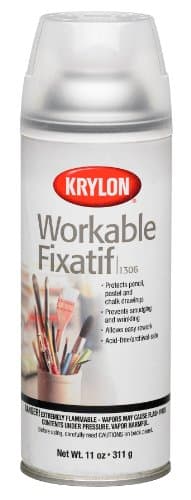
The Krylon Workable Fixatif is an aerosol spray designed to protect dry media artwork—graphite, colored pencils, charcoal, pastels, and chalk—without locking you into your first pass. Unlike permanent fixatives, this formula creates a coating you can erase through, which is a genuine lifesaver when you're layering values and realize you went one shade too dark on the mid-tones.
At 11 ounces per can, you get a decent amount of coverage for the price point. The matte finish keeps your work looking like original media rather than adding a plastic sheen. It's acid-free and archival-safe, meaning your drawings should stay intact for years without yellowing or degrading. Artists working with computer prints will appreciate that it's specifically formulated for that use case too, which expands its utility beyond traditional fine art.
Key Features
- Workable coating allows erasing through the fixative layer for corrections
- Acid-free and archival-safe formula prevents yellowing over time
- Protects against smudging, wrinkling, and handling damage
- Clear matte finish maintains natural artwork appearance
- Dries to the touch in approximately 30 minutes
- Non-wrinkling formula won't distort paper or media
- Suitable for pencils, pastels, chalk, and computer prints
Hands-On Review
I unboxed this on a Tuesday evening with a half-finished botanical illustration sitting on my desk—colored pencil on mixed-media paper, maybe 60% complete. The room smelled like a typical aerosol can, which reminded me I'd need to crack a window. First spray attempt went sideways: I held the can too close and got a wet spot that almost pooled into the highlights. Frustrating, but fixable.
After letting that first layer dry and backing off to about 15 inches, the second attempt went much better. The mist settled evenly, and I let it cure overnight before returning to work. Here's what surprised me: erasing through the coating worked exactly as advertised. I lifted a highlight area that was too bright on day three without disturbing the layers beneath. That flexibility is worth its weight in gold when you're building complex gradients.

By the end of the two weeks, I'd used the fixatif on seven pieces total—three colored pencil, two graphite, and two pastel sketches. The pastel pieces required two light coats rather than one heavy one to avoid disturbing the media, which ate into my coverage faster than expected. The non-yellowing claim held up when I compared the fixed pieces to unfixed reference sketches stored in the same conditions. No visible discoloration.
What I'd change: the spray nozzle. It works, but there's no variable output, so you get full blast every time. For small detailed areas, that's a drawback. Masking fluid or scrap paper becomes your friend. The matte finish is genuinely matte—no unexpected shine—but it did slightly deepen the saturation of my Prismacolor pencils, which I actually prefer for final pieces.
Who Should Buy It?
Here's where this fixative shines and where it doesn't:
- Layered colored pencil artists—the workable coating is a game-changer for multi-session projects where you need to protect earlier work while continuing to build values.
- Pastel and chalk artists—prevents the constant smudging that makes these mediums frustrating during handling and storage.
- Mixed-media artists—especially useful when combining traditional media with digital prints, since the formula is designed for that.
- Archival-focused hobbyists—the acid-free, non-yellowing formula gives peace of mind for pieces you want to keep long-term.
Skip this if you primarily work in wet media like watercolor or ink—you'll want a different product designed for those mediums. Also skip it if you need fine-grained spray control; consider a airbrush setup or trigger spray bottle instead for detailed work.
Alternatives Worth Considering
Depending on your priorities, these options might serve you better:
- Sculpey Translucent Liquid—offers a different application method if you prefer brush-on rather than spray for certain projects.
- Pebeo Fixative Spray—provides a comparable workable finish with slightly different coverage characteristics, worth trying if you want to compare results.
- Grumbacher Archival Spray—another archival-safe option with a different nozzle design that some artists prefer for precision work.
FAQ
It works best on dry media: graphite pencils, colored pencils, charcoal, pastels, and chalk. Avoid using it on wet media like watercolor or ink that hasn't fully dried.
Final Verdict
The Krylon Workable Fixatif does exactly what it promises: it protects dry media artwork while keeping it workable for corrections. The acid-free, non-yellowing formula gives it genuine archival credentials, and the matte finish won't betray your artwork's appearance. Yes, the aerosol application requires some getting used to, and you'll need to practice your spray distance for consistent coverage. But once you learn the technique, this becomes a reliable final step before storage or display. It's not a miracle product, but it's a solid, honest tool that earns its place in the studio. Recommended for serious dry-media artists who value flexibility and long-term preservation.